Watering Right in the Israeli Summer
Why the Israeli Summer Is a Different Challenge Altogether
From June to September, temperatures soar above 35 degrees Celsius, humidity plummets, and rain disappears entirely. Plants lose water through their leaves far faster than the soil can hold it. Add a dry easterly khamsin wind and clay soil that cracks as it desiccates, and you quickly realise that how and when you water matters at least as much as how much.
The good news: with a few straightforward habits you can grow a beautiful garden even in peak summer — and trim your water bill at the same time.
When to Water — Early Morning Is Pure Gold
The most important rule: water between 5:00 and 8:00 in the morning. At that hour the temperature is low, the air is calm, and most of the water has time to soak into the soil before the sun gains strength.
Watering at midday means losing 30–50% of your water to direct evaporation — literally throwing money into the air. Watering at night leaves foliage wet for hours and invites fungal disease. Early morning is the perfect compromise.
Key tip: if you are torn between a midday watering and skipping a day entirely — skip the day and water the next morning instead.
Deep and Infrequent, Not Shallow and Often
Short, frequent watering trains roots to stay near the surface — exactly where the soil heats up and dries out first in summer. Long, deep watering two or three times a week encourages roots to dive down into cooler, moister layers of the earth.
The simple test: an hour after watering, push a finger into the soil to the depth of the second knuckle (about 5 cm). It should feel moist — not waterlogged, not bone dry. If only the top centimetre is damp, you did not water long enough.
- Lawn: 2-3 times a week, 20-30 minutes per zone
- Fruit trees: once or twice a week, long and slow
- Vegetables: 3-4 times a week, depending on soil type
- Ornamental shrubs: more moderate — once or twice a week once established
Mulch — The Small Layer That Saves the Most
A 5-10 cm layer of organic material (wood chips, straw, shredded leaves, compost) around your plants reduces soil evaporation by 50% or more. That means you water less — and your plants still have plenty to drink.
Additional benefits: mulch cools the top layer of soil, suppresses weeds that compete for water, and enriches the soil as it breaks down. One thing to watch: do not pile it directly against the plant stem — leave a few centimetres of clearance to prevent rot.
Drip or Sprinkler — Which Is Better?
Drip irrigation delivers water directly to the root zone, slowly and evenly, with minimal evaporation loss. It also keeps foliage dry — which matters greatly in the Israeli summer, since wet leaves invite fungal disease. It is the better choice for almost every situation: vegetables, fruit trees, shrubs, and flowers all benefit.
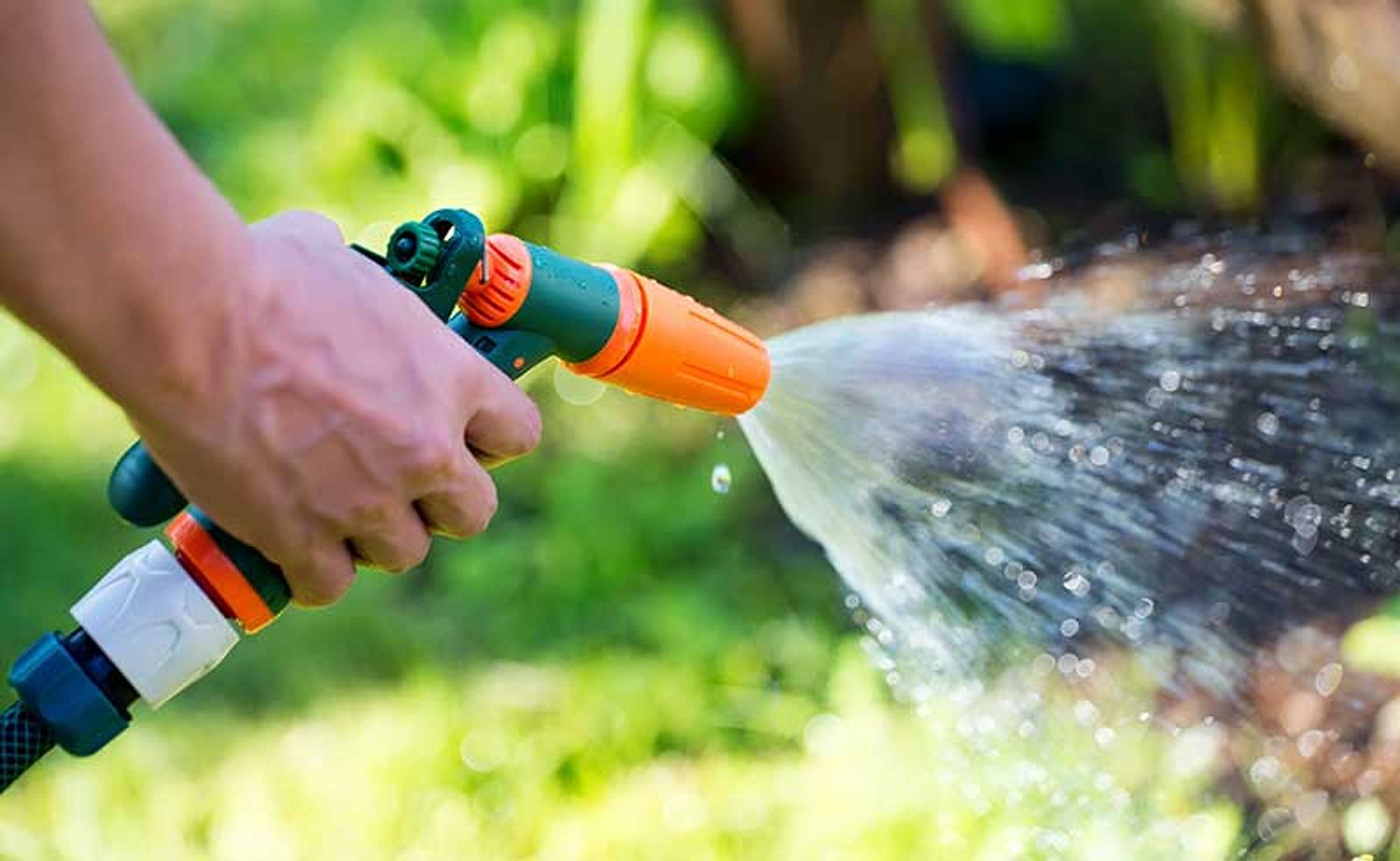
Sprinklers are best suited to lawns and broad ground-cover areas. When using them in summer, timing them for early morning is especially important, and it is worth checking that the heads are aimed correctly — water landing on the pavement helps nobody.
You do not need to replace everything at once. Starting with drip for your vegetable bed and fruit trees is enough to feel the payoff quickly — in water saved and in healthier plants.
How to Know If You Are Watering Right — Signs From the Plants Themselves
A plant getting too little water: leaves that curl inward or look wilted at midday but recover by evening; stems that lack their usual uprightness; dry, cracking soil. In severe cases: yellowing leaves that drop.
A plant getting too much water: soft, slightly slimy yellow leaves; rotting roots (brown, mushy, foul-smelling); a musty smell from the soil; small mushrooms appearing on the surface. Overwatering is less common here in summer, but in heavy, poorly drained soil it can damage roots just as badly.
The simple rule: a plant that looks limp in the morning is thirsty. A plant that looks limp only at midday is usually perfectly fine — it is just hot.
Water saving: check whether your local authority offers discounts on rainwater collection tanks or drip equipment — some Israeli municipalities provide subsidies.